

In Singapore, Tamil remains — formally — one of the country’s four official languages, alongside English, Malay and Mandarin. But official status alone has not guaranteed vitality: for many Tamil-Singaporeans, Tamil is no longer a living, everyday language. Despite decades of institutional effort — from school curricula to media channels and community festivals — the number of young people speaking, writing or reading Tamil fluently appears to be falling.
Recent data from the Ministry of Education (MOE) shows a modest increase in the proportion of students offering Tamil in national exams — from around 4–5% in 2013 to roughly 5–6% in 2023. On the surface, this may suggest stable interest among Tamil-heritage students. However, the raw percentage belies deeper trends: many Tamil-heritage homes speak English at home; intergenerational language transmission is weakening; and spoken Tamil outside formal settings is increasingly rare.
Studies of language use over generations reveal the steep decline. In earlier decades, a much higher proportion of Indian households used Tamil as their primary home language. 2010, only around 36.7% of Indian Singaporeans reported Tamil as their most frequently spoken home language. Meanwhile, the share of Indians speaking “other” languages at home — including English and non-Tamil Indian languages — has grown.
Linguistic capital
From a sociological standpoint, this is an example of “language shift”, a well-documented process where minority languages recede when the dominant language of the economy offers greater capital. English in Singapore carries what sociologist Pierre Bourdieu calls linguistic capital: fluency opens doors to education, careers, and global networks. Tamil, by contrast, offers symbolic and cultural value but fewer economic incentives. When a language loses its instrumental value, its intergenerational transmission weakens — exactly what we see today. Tamil, though taught in schools, struggles to find a foothold in daily life. As one community-body recently observed: “for Tamil to remain a living language, it is not enough for schools to make changes — the language has to live outside the school.” (Speech by Mr Tharman Shanmugaratnam, Minister for Education, at the 54th Thamizhar Thirunaal Community Fund Dinner Celebration, 2005)
Given this reality, a compelling question arises: is it realistic — or even necessary — to aim for high levels of literary fluency (poetry, novels, classical Tamil) among all Tamil-heritage youths in Singapore? Perhaps a more modest but impactful goal is to strengthen functional competence — ability to read, write, and speak Tamil at a basic level — and to support those with genuine literary interest to pursue deeper study.
Sociologically, cultures survive not by forcing uniform excellence, but by developing multiple layers of participation. Not everyone needs to be a literary writer; what matters is that the community sustains a core group of literary practitioners while enabling the broader population to retain functional fluency. This tiered model mirrors how many minority-language societies survive globally — by nurturing specialists without overwhelming the majority.
Not every Tamil-heritage child needs to become a poet or literary scholar; what matters is ensuring that all young Tamils achieve functional fluency and retain a meaningful cultural connection to the language.
Social realities
A targeted, tiered approach has several advantages. First, it reflects social reality — many Tamil-Singaporean families already operate primarily in English, and resources might be better used improving basic literacy than pursuing advanced literary standards few will use. Second, it recognises diversity within the Indian community: some families come from other Indian-language backgrounds, others may prefer English for pragmatic reasons, and yet others may be more comfortable with colloquial usage rather than literary Tamil.
Critics may warn that de-emphasising classical or literary Tamil risks opening the door to other Indian languages — Hindi, Telugu, Malayalam — as immigrants bring their own mother tongues. But that concern overlooks institutional context. Tamil is legally enshrined as one of Singapore’s official languages. This status is not purely symbolic: government policy subsidises Tamil-language media, supports Tamil teaching in schools, and maintains Tamil-heritage cultural programmes. So the risk of other Indian languages supplanting Tamil in official or institutional domains remains low.
What is at stake instead is the living, social vitality of Tamil among younger generations — its presence in homes, friendships, everyday conversation, and communal activity. Without efforts to adapt Tamil to the contemporary lives of Singaporean Indians, it risks remaining a school subject or ceremonial relic, rather than a language of daily expression.
A meaningful connection
To keep Tamil relevant in Singapore, community groups, educators, and families must recalibrate their expectations. Not every Tamil-heritage child needs to become a poet or literary scholar; what matters is ensuring that all young Tamils achieve functional fluency and retain a meaningful cultural connection to the language. Those with the passion and talent for literature can and should be nurtured, but advanced study should remain a pathway for the motivated, not a burden on the majority.
In an English-dominant society, preserving Tamil requires flexibility rather than rigidity: cultivating a literary core, supporting everyday speakers, and recognising that a language stays alive through daily use, not literary perfection. Tamil’s vitality does not depend on everyone writing novels — it depends on ensuring that the language remains spoken, lived, and embedded in the identity of Tamil Singaporeans.
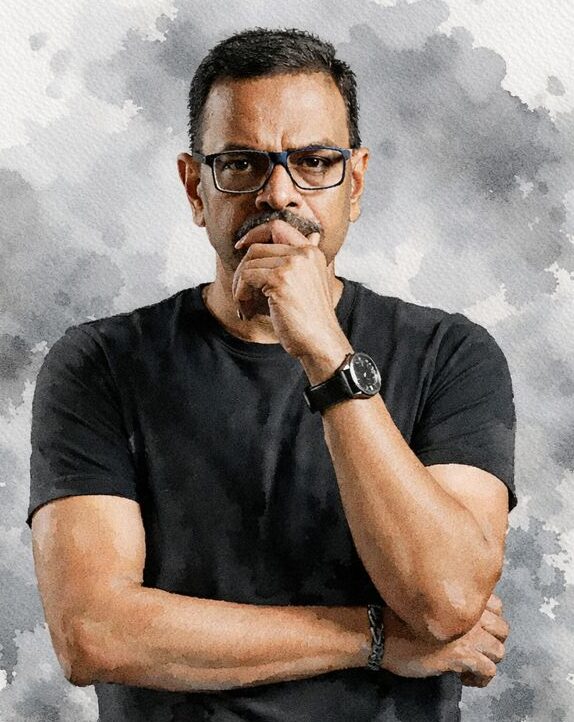 |
T D Rajoo is actively involved in the Indian community through the Tamil Language Society (TLS, NUS), Tamil Language and Cultural Society (TLCS), and Tamils Representative Council (TRC). He is the author of two poetry anthologies published by TLS (NUS) and the National Arts Council (NAC), and has commissioned, supervised, and edited scholarly works. He has a longstanding and focused interest in the Tamil language in Singapore and the Indian community at large. |